Methods for Statistical Inference 2018 (Paris)
Bayesian and machine learning methods for the next decade of cosmology.
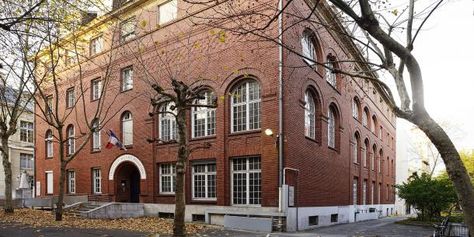
I attended the Methods for Statistical Inference school, held from 22 to 26 October 2018 at the Institut Henri Poincaré in Paris. The school aimed not only to foster collaboration but also to assess whether we have the right tools for cosmology over the next decade. A particular focus was on extracting the maximum cosmological information from data and on identifying new techniques and methods to achieve this.
The programme included around 25 talks on Bayesian techniques and machine learning. Those most closely related to my research interests were:
- Hierarchical modelling of weak lensing and photometric redshifts
- Bayesian optimisation for likelihood-free cosmological inference
- Bayesian analysis of astronomical catalogues, with application to measuring the Hubble constant using binary neutron stars
- Deep Learning architectures for the estimation of photometric redshifts of galaxies and the classification of light curves
- Promises and challenges of Deep Learning in Cosmology
- Posteriors and marginals in low and high dimensions with applications to large scale structure analysis
- Deep learning for science: steps to opening the pandora box
- Bayesian data interpretation with large scale cosmological models
- Machine learning based statistical inference
- Learning Multiscale Physics with Deep Neural Networks